
Looking Down into the Chasm
A meditation on crisis, humiliation, and nuclear weapons

Of course, no one takes the danger of nuclear war very seriously. It has been so long since the weapons were used — more than three quarters of a century — and experts claim that the “taboo” that has grown up around their use is so strong that no one would ever use them. So it’s hard to believe the use of nuclear weapons is an actual possibility. And, to be fair, it is always difficult to predict the future. I might be wrong.
Still, I am concerned about the present situation and the dangers it holds. First, one of the hallmarks of crisis is that it takes us unawares. People look back at the Jews who did not flee Germany as Hitler’s hold on the country tightened and ask, “How could they not have seen the danger coming?” Or they trace the shipments that were pouring into Cuba in the summer of 1962 — shipments of soldiers and materiel that would later be transformed into launch sites for short and intermediate range nuclear missiles — and ask, “How could the Kennedy Administration not have seen that the Soviets were sneaking nuclear missiles into Cuba? It was obvious.”
It is in the nature of crises that they come on us unexpectedly. Part of the definition of the word is that it is touched off by the sudden and unexpected appearance of danger.
Kennedy
So I want to point to some potential dangers, based on the history of crisis and the thinking of John F. Kennedy. Today there are two fairly plausible and realistic pathways to nuclear war. One involves the Russian Federation. The other involves the United States. Both, however, stem from the same potential cause. And to understand that cause, we have to listen to what President John F. Kennedy said about crises that involve nuclear weapons.
Kennedy, after having lived through the terrifying days of the Cuban Missile Crisis apparently spent time thinking about what he had learned from that narrowest of escapes. At some point, either during or after the crisis, he and many of the members of his administration read Barbara Tuchman’s Guns of August, a long, riveting description of how European nations, without really meaning to, stumbled into world war. It is agonizing to watch people making decisions that unintentionally heighten the danger until eventually all of Europe tumbles into a war that no one really wanted and that ultimate killed between 15 and 22 million people.
In the summer of 1963, some seven months after the Cuban Missile Crisis, Kennedy gave a major speech about peace. It’s a speech worth reading. In it he identified what it was that he thought was most likely to transform a confrontation from a shoving match into a nuclear war.
“We must, therefore, persevere in the search for peace . . . We must conduct our affairs in such a way that it becomes in the Communists’ interest to agree on a genuine peace. Above all, while defending our own vital interests, nuclear powers must avert those confrontations which bring an adversary to a choice of either a humiliating retreat or a nuclear war. To adopt that kind of course in the nuclear age would be evidence only of the bankruptcy of our policy — or of a collective death-wish for the world.”1
He apparently believed that crisis was most likely to turn into nuclear war when one or the other of the adversaries was faced with the prospect of humiliation. Being disgraced, being humbled was, according to Kennedy, the thing that might make a leader choose self-immolation over withdrawal. And there is a certain amount of evidence for this conclusion. Humiliation can drive people to extremes. After all, danger only threatens your life. Humiliation, on the other hand, threatens your identity and your sense of honor — things many people feel they cannot live without.
I think Kennedy’s warning is worth keeping in mind. Especially because there are two world leaders — leaders who command the world’s largest nuclear arsenals — who are currently facing the prospect of humiliation. In this year, in these next months, Vladimir Putin of Russia, and Donald Trump of the United States — both face the possibility of harsh humiliations.
War in Ukraine
President Putin initiated a full-scale war against Ukraine on February 24, 2022, with expert opinion in Russia and elsewhere expecting that the so-called “special military operation” would require only days or weeks to conquer all of Ukraine. However, the initial attacks failed. And astute counter-attacks by Ukraine and the slowdown of Russian progress in the spring of 2022 briefly raised hopes in Europe that Ukraine might pull off a stunning upset. But by 2023 a stalemate had settled in, with both sides deeply entrenched, and for the next three years experts were once again predicting that Ukraine was doomed. Russia, they pointed out, was bigger, had more industry, and had a huge advantage in manpower. (Russia’s population of 143 million dwarfs Ukraine’s 37.8 million.)
But in 2026 it became clear that Ukraine was winning. Russian losses were mounting at an unsustainable rate (with an estimated 1.4 battlefield casualties overall and between 400,000 and 500,000 killed from February of 2022 to today). No progress was being made in conquering more territory. And Ukraine clearly held an advantage on the battlefield because of its expertise in drone warfare. In fact, Ukraine had rapidly evolved into one of the premier drone developers, making some of the least expensive and most effective drones in the world.
Their level of expertise can be seen by the fact that during the war between the United States, Israel and Iran, when Iranian missiles and drones attacked U.S. bases and U.S. allies in the Middle East, a number of countries turned to Ukraine for help. They are now widely considered to be the world leader in drone warfare.
Ukraine has proved surprisingly resilient, resourceful, and innovative. Their most spectacular attack was achieved by smuggling drones on tractor trailers into Russia, and releasing those drones near airbases from one end of Russia to the other. The attack not only shocked the Russians (and observers around the world) it showed that a weaker, smaller nation could destroy an estimated 34% of an adversary’s most important long-range aircraft.
More strategically important, however, has been Ukraine’s long-range campaign aimed at the centerpiece of Russia’s economy, the main source of Russia’s national wealth: its oil export industry. Some estimate that these attacks have degraded as much as 40% of Russia’s oil exporting capacity.2
In addition, Ukraine has also begun using drones to attack supply trucks bringing ammunition and other vital supplies to the front. This innovation has many front line Russian troops running low on ammunition, food, and other military essentials. Some observers have speculated that if enough of the supplies going to Russian soldiers guarding Crimea can be choked off, Ukraine might be able to reconquer Crimea.
These two campaigns, which both appear to be having a significant impact, have now convinced many observers in Europe and the United States that Russia is teetering on the edge of losing the war. Several prominent media outlets have published stories asking where Putin is and whether he’s losing his grip on power.3
And Ukraine’s leaders have not been above rubbing Putin’s nose in the dirt. Putin held an international economic forum in St. Petersburg on June 3-6 this year. That forum, often called “Putin’s Davos” is a showcase for Russia’s economic importance. On the morning the forum was to open, Ukrainian long-range drones struck the oil export facilities in St. Petersburg’s harbor, causing explosions and sending clouds of black smoke trailing across St. Petersburg’s skies. The dignitaries who had travelled from around the world to attend his conference were confronted with vivid evidence of Russia’s inability to defend its most important economic asset.
All in all Putin’s situation is very precarious. He has instigated a disastrous war that has generated high casualties, that has exposed Russia’s military weakness, and that is currently crippling its oil refining and export business and therefore damaging the national economy. His inability to enforce his will on a smaller, less wealthy, less powerful adversary is a constant and growing humiliation for Putin.
War in Iran
President Trump’s attack on Iran was more obviously ill-considered than President Putin’s attack on Ukraine. Each presumably hoped for a boost in prestige and an increased ability to intimidate. But Putin’s gamble at least had some chance of success. Given the growing evidence that drones are the crucial weapon in war at the moment, the vulnerability of slow moving tankers filled with millions of gallons of flammable oil, and the bottleneck created by the Straits of Hormuz, ought to have been obvious. Clearly, Iran had the ability to close the straits at will. Since a fifth of the world’s oil travels through those straits, Iran was clearly in a position to blackmail the world whenever it wanted to.
The attack by the United States and Israel, which assassinated Iran’s Ayatollah, other highly placed leaders, and killed thousands of innocent civilians, are likely to have motivated Iran’s surviving leaders to want to inflict a painful and prolonged revenge on the United States. Which shouldn’t be a surprise. After all, when we in the United States were attacked out of the blue on 9/11, we retaliated by launching a war in Afghanistan that lasted 20 years.
Despite the fact that there have been several attempts to negotiate an end to the conflict, the United States and Iran are still at odds and still occasionally attacking each other.4 The Straits of Hormuz are not yet open. And it seems unlikely that the conflict will be resolved any time soon. If you were Iran’s leadership, and you had finally gotten a grip on the United States that allowed you to hurt it whenever you wanted, would you let go? The United States instituted painful sanctions on Iran and kept those sanctions in place for 45 years. Now that Iran’s leaders have gotten the United States in their grasp, are they likely to give up the chance to punch us whenever they feel like it?
And make no mistake about it, President Trump is being humiliated. He is currently in a very vulnerable position. Threats to his identity hedge him round on every side. There is considerable danger that the mid-term elections will put an end to his party’s control of Congress, allegations of his using the presidency to enrich himself are growing, most Americans are experiencing hardship because of the sluggish economy (which the war with Iran is only making worse) and so on. Everything that he is and everything that he has accomplished — including his desire to be seen as a strong, intimidating president — is currently at risk.
Nuclear weapons
Throughout history, various weapons in different places and different eras have come to be seen as symbols of national power and greatness. Chariots, mounted knights, and battleships all, at one time or another, represented power and prestige. Those weapons were symbols that enhanced the reputation of the great power that possessed them. People counted the number of chariots or knights or battleships you had in order to tell who was powerful. We now call weapons like that “currency of power” weapons. Today, nuclear weapons have achieved that status. As a result, in some ways their symbolic importance is as important or more important than their military value. And as symbols of strength they are seen as the ultimate tool in coercion, the best and most terrifying way to intimidate or punish an enemy.
So let me ask you, if you were a powerful leader, someone who had — through effort and sacrifice — achieved command over a great country, and if you were facing a humiliating defeat (and possibly even overthrow and execution), and if you held in your hand the weapon that everyone said was the most punishing and intimidating weapon ever, wouldn’t you use that weapon?
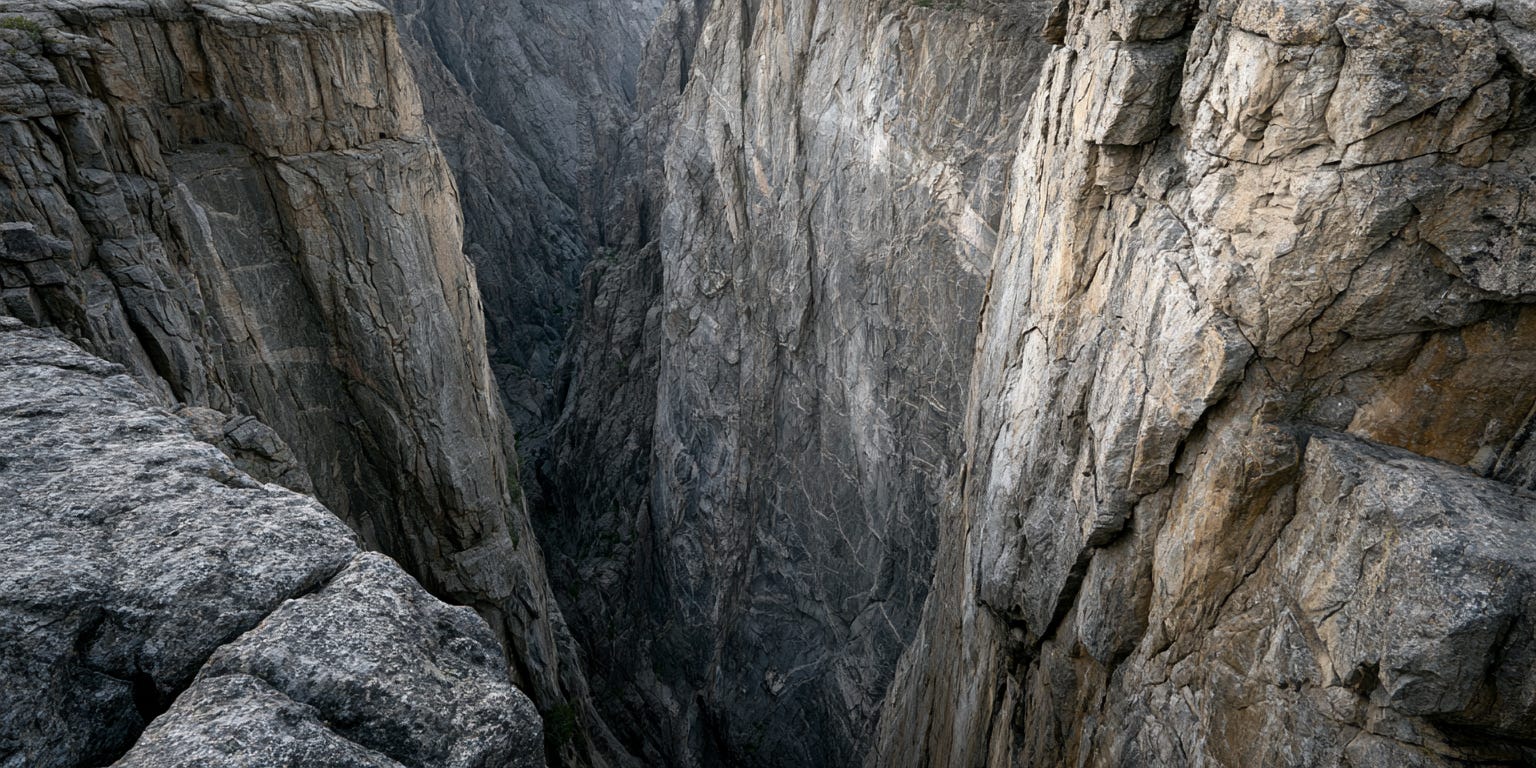
People say that the “taboo” against using nuclear weapons is too strong. But do you believe that that so-called taboo is strong enough to prevent someone who is desperate, someone who has risen to the highest heights and now stares down into the abyss of utter failure, loss of power, and maybe even death, from seeing the use of the “ultimate” weapon as their salvation?
I’m not saying that nuclear war is a certainty. The future is too clouded for any claims of certainty. All sorts of outcomes are possible. Things might turn out alright.
All I’m saying is that the guy who lived through this same kind of gut-wrenching crisis said the key was not forcing humiliation on a leader with his finger on the button. And right now there are two leaders who are teetering on the edge of a dark chasm of humiliation.
I’m sorry if this seems doom-laden and frightening. I not trying to frighten you. I’m just telling you what I see. I think there is a possibility of nuclear war out there. And I believe that when you’re facing danger — and nuclear war would be a catastrophe of enormous proportions — the best way to come through unscathed is to be as realistic as possible.
The Economist, https://www.economist.com/by-invitation/2026/05/06/vladimir-putin-is-losing-his-grip-on-russia, The Carnegie Endowment, https://carnegieendowment.org/podcasts/the-world-unpacked/putin-is-losing-his-grip-on-russia, The Guardian, https://www.theguardian.com/news/audio/2026/jun/10/grandpa-in-a-bunker-putin-losing-control-podcast
And as of this morning — July 9, 2026 — (I’m editing some errors out of this piece) President Trump has announced that the agreement with Iran is off and U.S. bombing of Iran has recommenced.
Very helpful analysis of a confused continuing connfusion.
Really good article, Ward. I think we should also add the context these leaders operate in. That includes the institutional and human structures that manage both the run-up to nuclear weapons use (or accidental use) and the actual operationalization of their use. The collapse of the legal, moral, ethical and political structures is of great concern... as these have worked as breaks in the past. Understanding how we reinvest in the broader societal foundations for peace and conflict management should be a high priority